
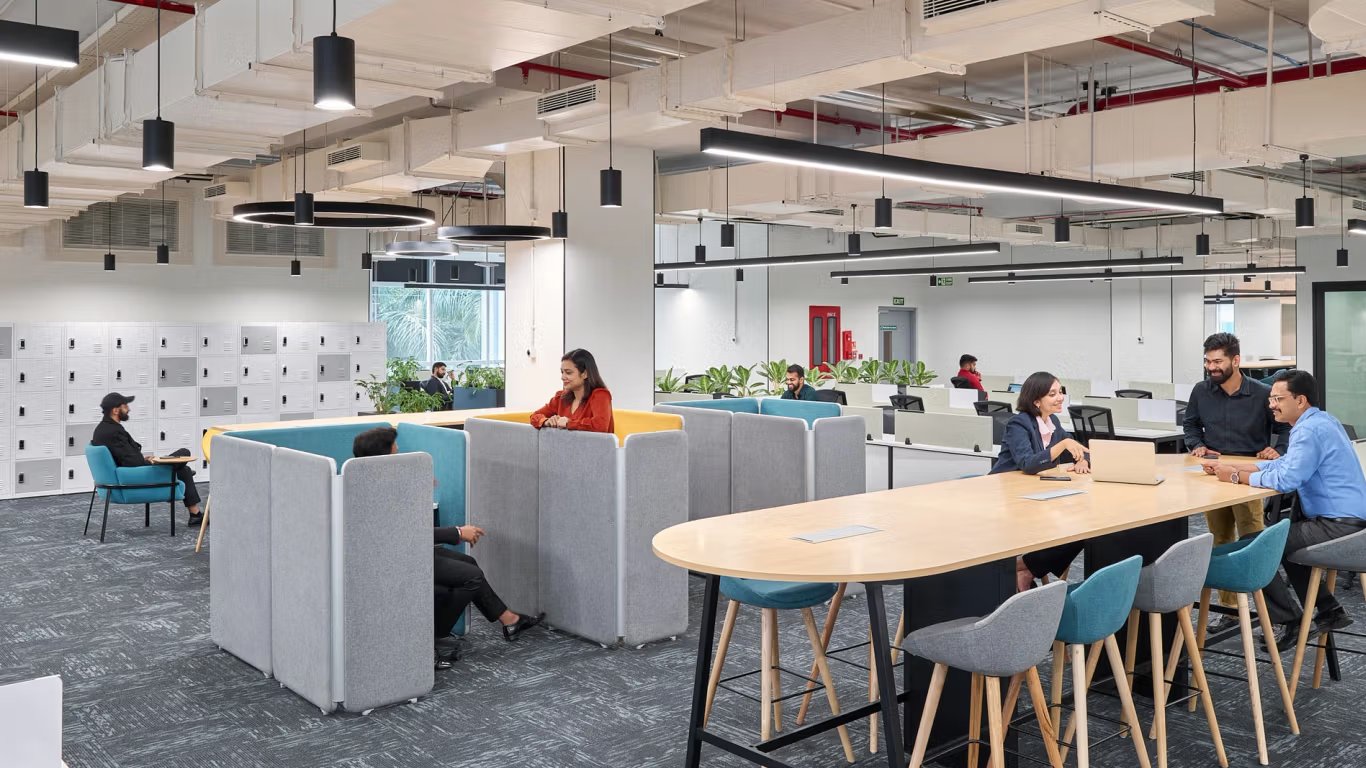
A coworking space is a shared office environment where professionals from different industries work independently or collaboratively under one roof. Instead of committing to a traditional office space, individuals and teams can use flexible workspaces that offer convenience, community, and productivity.
This model has changed how people perceive a work area. From freelancers to startups and remote teams, plug-and-play offices provide a professional environment without long-term commitments.
The Concept of Coworking
The concept of coworking revolves around sharing a workspace while maintaining independence. A coworking space is a shared setup where people from different companies work in the same environment.
Unlike a traditional office, this model promotes flexibility, collaboration, and efficiency. It allows professionals to move beyond a home office setup and access a structured work environment.
These spaces are designed to support flexible and hybrid work models, making them highly relevant in today’s evolving work culture.
History and Evolution of Shared Workarea
The history of coworking began in the early 2000s when the first official shared workspace opened in San Francisco. This marked the beginning of a global shift in how office space was utilized.
Over time, the evolution of coworking has been rapid. What started as small shared work setups has now grown into a global coworking market. Today, brands like WeWork have scaled this concept into premium flexible office solutions.
Modern coworking spaces are now built to serve startups, enterprises, and independent professionals alike.
How Coworking Spaces Work
To understand how coworking spaces work, think of them as flexible office solutions. Users can rent desks, private offices, or meeting rooms based on their needs.
Most coworking spaces operate on membership-based models daily, weekly, or monthly. This eliminates the burden of long-term office lease commitments.
- High-speed internet
- Dedicated meeting room access
- Private office cabins
- Event spaces for networking
- A professional business address
Such setups allow individuals to work from a professional space without managing infrastructure.
Types of Coworking Spaces
Open Workstation
Shared desks in a common area. Ideal for freelancers and remote workers.
Private Office Setup
Enclosed office space within a shared environment for teams needing privacy.
Managed Office Solutions
Fully customized workspaces tailored for businesses.
Niche Workstation
Industry-specific spaces for creatives, tech professionals, or startups.
Enterprise Workstation
Large-scale flexible offices designed for corporations adopting hybrid work models.
Benefits of Coworking Space
- Flexibility: Scale your workspace as your needs grow.
- Cost Efficiency: Lower overhead compared to traditional office space.
- Networking Opportunities: Collaborate with diverse professionals.
- Better Work Environment: Improved focus vs working from home.
- Access to Amenities: Meeting rooms, events, and more.
Advantages Over Traditional Office Space
- No long-term lease commitments
- Immediate access to a professional workspace
- Opportunity to work alongside diverse professionals
- Improved work-life balance
- A collaborative and engaging work environment
Who Should Use Coworking Spaces?
- Freelancers: Structured and productive work environment
- Startups: Operate without heavy office investment
- Remote Workers: Alternative to working from home
- Enterprises: Support hybrid work strategies
Choosing the Right Coworking Space
- Location and accessibility
- Pricing and flexibility
- Amenities and infrastructure
- Community and environment
- Scalability options
Future of Coworking Spaces
- More tech-enabled workspaces
- Community-driven environments
- Sustainable office designs
- Increased enterprise adoption
Flexible workspaces will continue to shape the future of how people work.