
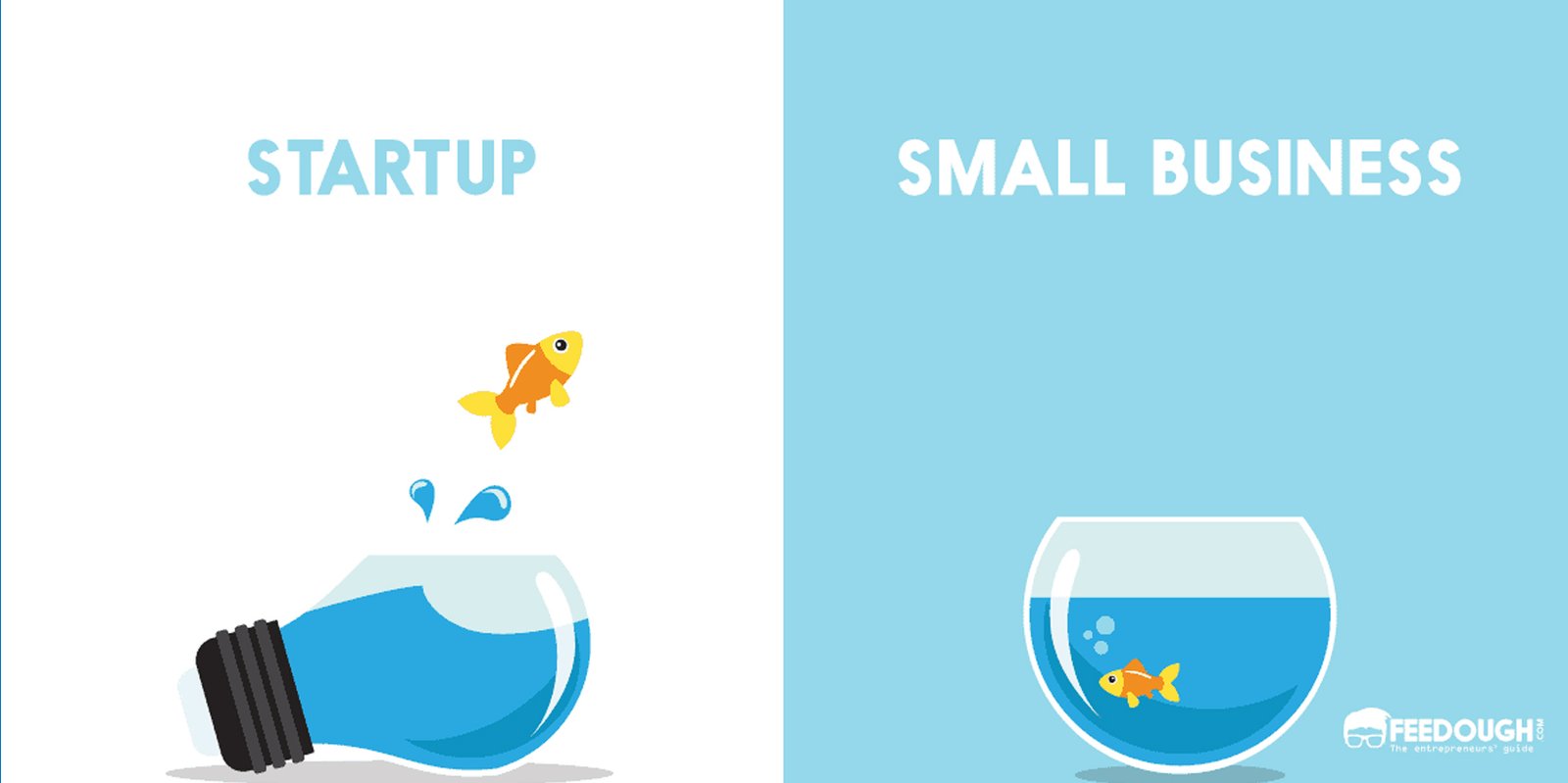
Every new venture begins with an idea, but not every new venture is a startup. Many people use the terms startup and small business interchangeably, assuming they mean the same thing. While both involve entrepreneurship and business ownership, their goals, growth strategies, and operating models are often very different.
Understanding these differences can help entrepreneurs make better decisions about funding, hiring, scaling, and choosing the right work environment. Whether you're planning to open a local café or build the next technology platform, knowing which path aligns with your vision is an important first step.
Difference Between Startup and Business: Understanding the Key Differences
The difference between startup and business goes beyond company size or revenue. A startup is typically created to solve a problem through innovation and is designed to scale rapidly. A traditional business, on the other hand, focuses on generating steady income by serving an established market.
Although both models can become highly successful, they follow different business journeys and require different strategies.
What Defines a Startup?
A startup is an early-stage company built around an innovative idea, product, or service with the potential for rapid growth.
Unlike conventional businesses, startups often operate in uncertain markets while testing assumptions, improving products, and searching for product-market fit. Many technology companies begin this way, developing a minimum viable product before expanding to larger markets.
Because of their growth ambitions, startup founders frequently seek support from angel investors or venture capital firms to accelerate expansion.
Common characteristics include:
- High scalability
- Innovation-driven approach
- Fast growth potential
- Technology-focused solutions
- Willingness to disrupt existing industries
Companies such as Uber and Airbnb are well-known examples of organizations that began as startups before becoming global businesses.
What Is a Traditional Business?
A traditional business is established to provide consistent products or services while generating stable profits over time.
Instead of focusing on exponential growth, these businesses generally serve a defined customer base and prioritize sustainability.
Examples include:
- Restaurants
- Retail stores
- Salons
- Local agencies
- Manufacturing companies
- Professional service firms
Many small business owners finance operations through personal savings or business loans rather than external investors.
This approach often involves lower risk and predictable growth compared to high-growth ventures.
Startup vs Traditional Business: Key Differences
Although both models aim to generate revenue, their priorities are quite different. Here's a quick comparison:
| Factor | Startup | Traditional Business |
|---|---|---|
| Primary Goal | Rapid innovation and growth | Stable income and long-term sustainability |
| Growth Strategy | Designed to scale quickly | Steady and predictable expansion |
| Funding | Angel investors, venture capital | Personal savings, loans, business revenue |
| Risk Level | Higher | Lower |
| Market Focus | Creating or disrupting markets | Serving existing demand |
| Innovation | Core objective | Incremental improvements |
The most significant difference lies in scalability. While one model aims to grow rapidly, the other focuses on building a sustainable operation within a defined market.
Startup vs Small Business: Which Is Right for You?
Choosing between these two paths depends on your personal goals, available resources, and appetite for risk.
If your ambition is to build a technology-driven company capable of serving millions of users, attracting investors, and expanding internationally, a startup model may be the right choice.
However, if your objective is to own a profitable local enterprise that provides stable income and long-term security, a small business could be a better fit.
Neither option is inherently better—they simply serve different entrepreneurial goals.
Consider These Questions Before You Begin
- Are you solving a new problem or improving an existing service?
- Do you want rapid expansion or consistent growth?
- Are you comfortable seeking external investment?
- Is your business model built for scalability?
- What level of financial risk are you prepared to take?
Answering these questions can help you make informed decisions before launching your venture.
Funding and Growth Strategies
One of the biggest distinctions between the two models is how growth is financed.
High-growth companies often rely on angel investors and venture capital to accelerate expansion. In return, investors typically receive equity and expect strong returns as the company grows.
On the other hand, local enterprises usually expand through customer revenue, retained profits, or bank financing. This approach gives owners greater control while reducing pressure to grow at an aggressive pace.
Neither funding strategy is universally better—it depends on your long-term vision and business objectives.
Which Workspace Is Best for a Growing Company?
As a business evolves, its operational needs also change.
In the early stages, entrepreneurs often look for affordable office space that supports collaboration without the expense of a long-term lease. Flexible workspaces provide access to meeting rooms, high-speed internet, and professional infrastructure while allowing teams to expand as needed.
Whether you're building an innovative technology company or managing a growing local enterprise, having the right environment can improve productivity, strengthen client relationships, and support future growth.
At Eureka Coworking, entrepreneurs, freelancers, and growing teams can choose from flexible desks, private cabins, and fully equipped meeting rooms that adapt to changing business needs.
Frequently Asked Questions
Is every new business a startup?
No. Every startup is a new business, but not every new business is a startup. Many companies are established to generate steady income rather than pursue rapid growth.
What is the biggest difference between a startup and a traditional business?
The biggest difference is the growth strategy. Startups are built for scalability and innovation, while traditional businesses focus on consistent profitability and long-term stability.
Do startups always need investors?
Not necessarily. Some founders bootstrap their companies during the early stages, while others seek external funding to accelerate growth.
Are small businesses less successful than startups?
No. Success depends on achieving the owner's goals. Many local businesses generate stable revenue for decades without pursuing rapid expansion.
Which model carries more risk?
Businesses built for rapid growth generally involve greater uncertainty because they invest heavily in innovation, hiring, and market expansion before achieving profitability.
Can a small business become a startup?
Yes. If a company develops an innovative solution with significant growth potential and adopts a scalable business model, it may transition toward a startup approach.
Conclusion
Understanding the difference between startup and business helps entrepreneurs choose a path that aligns with their ambitions, resources, and long-term vision. While one model emphasizes innovation and rapid expansion, the other prioritizes steady growth and financial stability.
Before making a decision, evaluate your target market, funding requirements, business model, and personal goals. There is no single formula for success—only the approach that best fits your vision.